

 See My Latest Article on HelloNation
How can yoga help with daily energy?
Gentle yoga can support daily energy by combining movement, breathing, balance, and brief periods of focused rest. It does not create energy in the same way as sleep or food, but it may help reduce stiffness, improve circulation, and make the body feel more prepared for daily activities.
For residents of Lamesa, a short routine can be especially useful after waking, before outdoor chores, or during a midday break. Warm, dry conditions and long periods spent driving, sitting, working indoors, or doing physical tasks can leave the hips, back, shoulders, and legs feeling tight. A few simple poses may help restore comfortable movement without requiring a long workout.
The most useful routine is one that can be repeated safely and consistently. Five to fifteen minutes is enough for many people.
Which yoga poses are best for morning energy?
Morning poses should gradually wake up the spine, legs, shoulders, and breathing muscles. The goal is alertness without strain.
Cat-Cow Stretch
Cat-Cow is a gentle spinal movement performed on hands and knees.
- Place the hands under the shoulders and the knees under the hips.
- Inhale as the chest moves forward and the back gently arches.
- Exhale as the spine rounds and the chin moves slightly toward the chest.
- Continue slowly for five to eight cycles.
This pose can reduce the stiff feeling that often follows sleep. Keep the movement comfortable rather than trying to create a deep arch or strong rounding.
Child’s Pose With Side Stretch
Child’s Pose can relax the back, while a side stretch opens the muscles along the ribs and waist.
- Begin on hands and knees.
- Move the hips back toward the heels, using a folded towel or cushion if needed.
- Reach the arms forward.
- Walk both hands slightly to one side and breathe into the opposite side of the body.
- Repeat on the other side.
Anyone with knee discomfort can keep the hips higher or perform the stretch while seated.
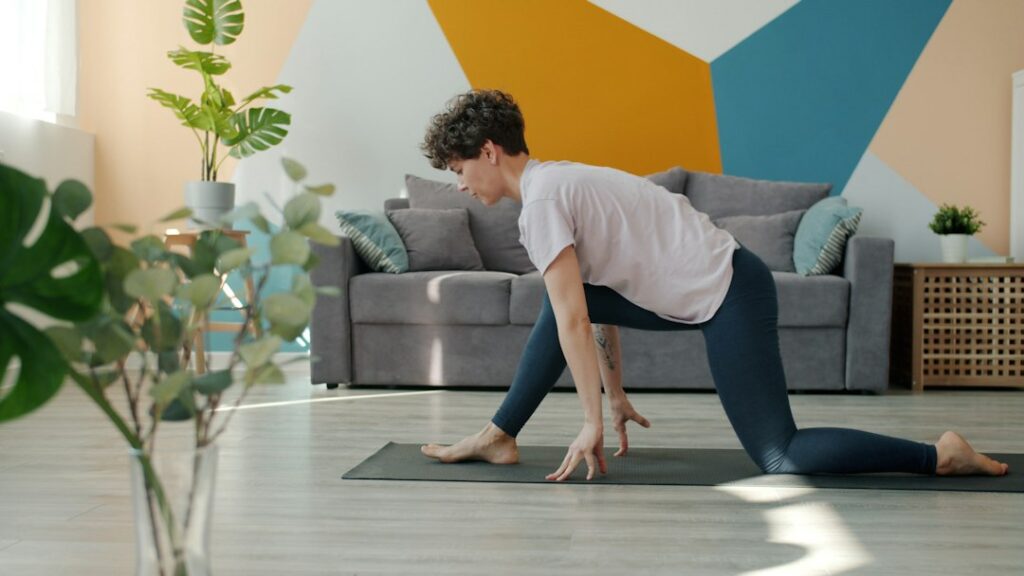
Low Lunge
A low lunge opens the front of the hips and can be helpful after sitting for long periods.
- Step one foot forward between the hands.
- Lower the back knee to a padded surface.
- Keep the front knee generally above the ankle.
- Lift the chest without forcing the hips forward.
- Hold for three to five slow breaths, then switch sides.
Place the hands on blocks, a sturdy chair, or the front thigh if reaching the floor is uncomfortable.
What yoga poses can improve alertness during the day?
Standing poses may help increase alertness because they engage the legs and encourage upright posture. They can be useful during a midday pause or after extended desk, vehicle, or household work.
Mountain Pose
Mountain Pose looks simple, but it teaches balanced standing.
- Stand with the feet hip-width apart.
- Let the arms rest by the sides.
- Lengthen through the crown of the head.
- Relax the shoulders while keeping the chest comfortably open.
- Take five slow breaths.
Avoid locking the knees. Notice whether the weight is evenly distributed across both feet.
Chair Pose
Chair Pose strengthens the thighs and hips while raising the heart rate slightly.
- Stand with the feet hip-width apart.
- Bend the knees as if sitting back into a chair.
- Keep the weight toward the heels.
- Reach the arms forward or overhead if the shoulders allow.
- Hold for two to four breaths, then stand slowly.
The bend does not need to be deep. A shallow version can still provide useful leg work.
Warrior II
Warrior II combines leg strength, hip mobility, and focused breathing.
- Step the feet wide apart.
- Turn one foot outward and bend that knee gently.
- Keep the opposite leg straight but not locked.
- Extend the arms in opposite directions.
- Look over the front hand only if the neck feels comfortable.
- Hold for three to five breaths before changing sides.

This pose may be tiring for people with balance or hip concerns. A shorter stance and smaller knee bend are reasonable modifications.
Is downward-facing dog good for energy?
Downward-Facing Dog can be energizing for some people because it lengthens the back of the body and places the head below the heart. It is not appropriate for everyone, particularly people with certain wrist, shoulder, eye, blood pressure, or balance concerns.
To practice a gentler version:
- Begin on hands and knees.
- Tuck the toes and lift the hips only partway.
- Keep the knees bent.
- Press the hands firmly into the floor.
- Let the spine lengthen rather than trying to straighten the legs.
- Hold for two to five breaths.
A standing forward fold with the hands resting on a chair may provide a similar feeling with less pressure on the wrists. Anyone who feels dizzy should come out of the pose immediately and return to a comfortable seated or standing position.
Which breathing practices support steady energy?
Slow, controlled breathing may help reduce mental tension and improve awareness without causing overstimulation. A simple equal-breath practice is appropriate for many beginners.
Sit or stand comfortably. Inhale through the nose for a count of four, then exhale for a count of four. Continue for one to three minutes without holding the breath. The count can be shortened if breathing feels strained.
A longer, relaxed exhale may be useful when stress is draining energy. For example, inhale gently for four counts and exhale for five or six counts. Breathing should remain quiet and comfortable. Forceful breathing, extended breath-holding, or rapid breathing is not necessary for a daily energy routine.
How long should a yoga routine last?
A short routine performed regularly is usually more practical than an occasional long session. A basic sequence might include:
- Cat-Cow for one minute
- Low Lunge for three breaths per side
- Mountain Pose for five breaths
- Chair Pose for two or three breaths
- Warrior II for three breaths per side
- Gentle breathing for one to three minutes
This sequence can be completed in about eight to twelve minutes. On days when energy is low, use only seated stretches, Cat-Cow, and breathing. On days when the body feels strong, add another round of the standing poses.
Hydration also matters, particularly during warmer weather or after outdoor activity. Yoga should not replace regular meals, adequate sleep, or medical care for persistent fatigue.
What should beginners avoid?
Yoga should feel challenging in a manageable way, not painful. Avoid bouncing, forcing a stretch, holding the breath, or trying to match someone else’s range of motion.
Use a wall or sturdy chair for balance when needed. A folded blanket can protect the knees, and a towel can make seated positions more comfortable. Practice on a stable, nonslip surface and allow enough space to move without hitting furniture.
Stop if there is sharp pain, chest discomfort, faintness, unusual shortness of breath, sudden weakness, or a new loss of balance. Ongoing or unexplained fatigue may have causes that yoga cannot address, including sleep problems, medication effects, anemia, infection, thyroid conditions, or other health concerns. In those situations, medical evaluation is more appropriate than increasing exercise intensity.
When is the best time to practice?
The best time is the part of the day when the routine can be performed safely and consistently. Morning practice may help loosen the body after sleep. A midday sequence can interrupt prolonged sitting and improve body awareness. An early evening routine may reduce stiffness after work, though vigorous poses immediately before bed may feel too activating for some people.
Keep the space cool enough for comfortable movement, especially during warm seasons. Practicing near a window, in a shaded room, or during a cooler part of the day can make the routine easier to maintain. The purpose is not to push through discomfort; it is to help the body move, breathe, and transition into the next part of the day with greater ease.